Our Work
CYENS Centre of Excellence is a leading Research and Innovation hub specializing in Interactive Media, Smart Systems, and Emerging Technologies. As the only organization in Cyprus dedicated to immersive technologies, it plays a vital role in advancing knowledge and facilitating technology transfer across the region. This Centre is the result of a unique collaboration between three public universities—the University of Cyprus, the Cyprus University of Technology.
PainAid
Pain Assessment for People with Dementia
End Date
30th October 2025
Location
CYENS Centre of Excellence
Many people with dementia (PwD) face significant barriers in communicating their pain, limiting their access to effective care and treatment. Managing pain effectively – rather than as a trial-and-error approach – is nearly impossible without an accurate assessment of pain levels. Past research shows that VR can be instrumental in effective pain relief. However, the mechanism of action and specific effects of VR technologies on pain management in PwD remain largely unexplored and poorly understood, even though this fundamental knowledge and mechanistic insights are essential to accurately assess pain levels and experiences in patients who struggle in communicating it.
The PainAid project aims to address the critical challenge of pain assessment in people with dementia, who often face significant barriers in communicating discomfort due to cognitive decline. By pioneering the integration of advanced technologies, the project seeks to develop innovative, non-verbal pain assessment tools tailored for people with dementia.
These tools will leverage multimodal indicators, including behavioral and physiological data, to create an inclusive, bias-resistant framework for pain evaluation. The project’s multidisciplinary approach combines insights from psychology, human-computer interaction, and healthcare technology to advance state-of-the-art methodologies for dementia care. Through a co-creation process with caregivers, healthcare professionals, and people with dementia advocates, the project ensures the tool will be user-centered, practical, and scalable for clinical applications. This initiative also lays the groundwork for the ERC, which aims to create personalized, non-invasive interventions to alleviate pain, transforming traditional care paradigms. The outcomes will include validated pain assessment models, predictive algorithms, and user-friendly technologies that enhance inclusivity and effectiveness in dementia care.
By addressing this unmet clinical need, the project promises to improve the quality of life for people with dementia, reduce caregiver burden, and advance personalized medicine. It positions itself as a transformative contribution to digital health innovation, aligning with the European Research Council’s objectives of fostering groundbreaking research with societal impact.
Contact Person:
Dr. Maria Matsangidou
Email: m.matsangidou@cyens.org.cy
MRG: HealthXR
News
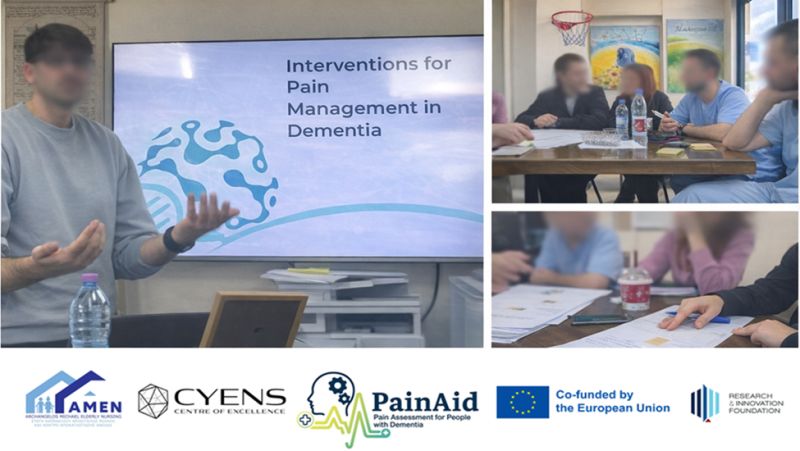
PainAid launches its first Information Day with healthcare professionals
We were pleased to hold the first PainAid Information Day with healthcare professionals at Στέγη Καϊμακλίου “Αρχάγγελος Μιχαήλ” Κέντρο Αποκατάστασης Άνοιας.
The event focused on how pain is recognised in people with dementia, especially when they are unable to communicate it verbally. Through participatory discussions and reflective activities, healthcare professionals shared valuable insights into the behavioural, bodily, and contextual signs through which pain is often identified in dementia care.
Participants also highlighted important challenges in current practice, including the subjective nature of assessment, fragmented tools, and the need for stronger coordination across care settings. A key message that emerged was the importance of developing more integrated, multimodal, and practice-ready support tools to improve pain recognition in people with dementia.
We warmly thank all participating professionals for their time, openness, and valuable contributions to the PainAid project.
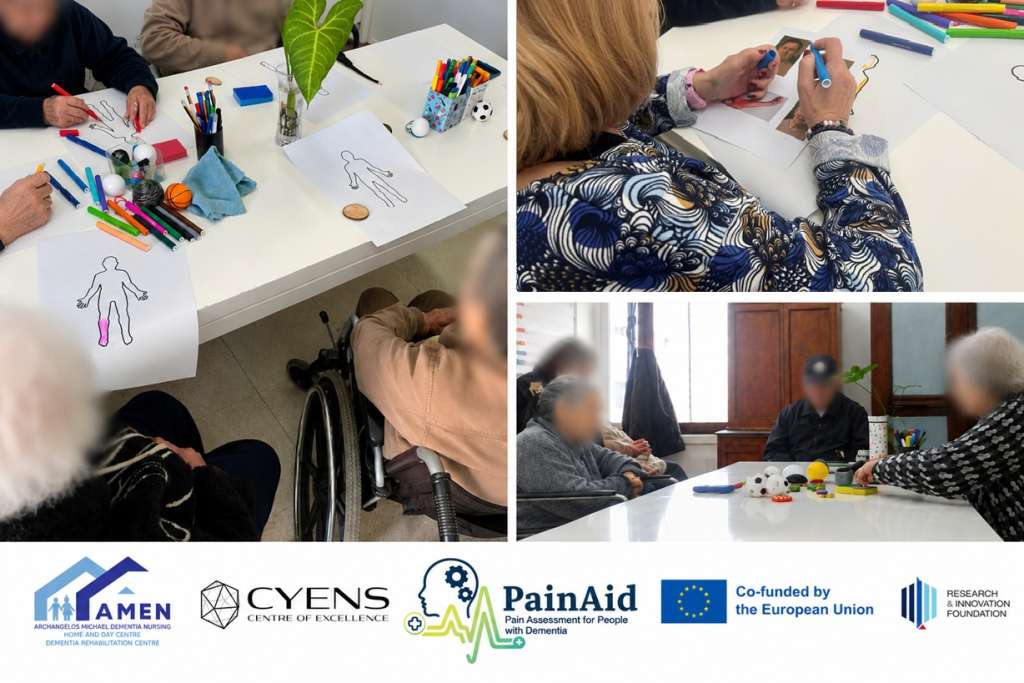
PainAid holds co-creative workshops with people living with dementia
As part of the PainAid project, we held co-creative workshops with people living with dementia to better understand how pain is felt, expressed, and communicated when words are not always available.
Through gentle, supportive activities involving touch, colour, movement, images, and body-based reflection, participants shared important insights into the many ways pain can be communicated beyond verbal language.
These workshops reminded us that pain in dementia is not only physical, but also deeply embodied, relational, and context-dependent. They also highlighted the importance of designing future pain assessment approaches that are more inclusive, humane, and responsive to lived experience.
We thank all participants and the teams at Στέγη Καϊμακλίου “Αρχάγγελος Μιχαήλ” Κέντρο Αποκατάστασης Άνοιας for supporting this important stage of the project.
Similar Projects

SEM-CMR
Deep semantic volumetric reconstruction of cardiac magnetic resonance imaging Starting…

RAISE-UP
Starting date 1st of March 2026 End date 29th of…

METACIVICEDU
Starting date End date METACIVICEDU Empowering Future Citizens Unleashing XR…

RISE
Starting date End date ABOUT The proposed Research centre on…

eCAN Plus Joint Action
Starting date 1st May 2025 End date 30th April 2029…

Cyprus Skills Knowledge Intelligence Learning and Labor System powered by AI
Phase A March 2026 – November 2026 PHASE B December…